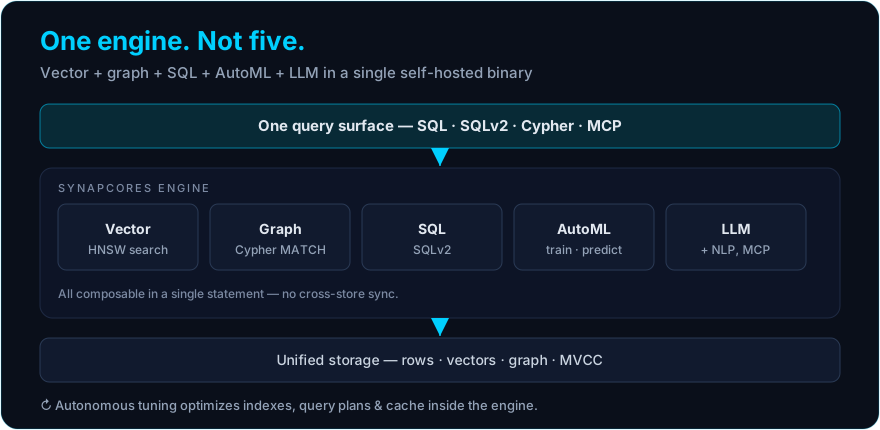
An AI-native database puts vector search, graph traversal, machine learning, and LLM inference inside the database engine itself, instead of bolting them on as separate services you have to wire together and keep in sync.
That distinction matters because the standard alternative — a relational database, a vector store, a graph engine, and a model server, glued together with sync jobs — adds a network hop and a failure mode at every seam. Every extra system is another place state can drift from what it's supposed to represent.
This guide explains what an AI-native database actually does differently, walks through the architecture, and shows where it changes what you can build.
Meet SynapCores — the AI-native database this guide describes. It unifies vector search, a graph engine, SQL, and in-database AutoML in a single self-hosted binary — with native MCP support and an OpenClaw long-term-memory plugin built in. The Community Edition is free for macOS, Linux, and Docker. Download the free Community Edition → · Explore the features → · See the live demos →
A note on scope. Capabilities marked (Enterprise / roadmap) below are part of the SynapCores Enterprise tier or roadmap and are not in the free Community Edition today. Everything unmarked — unified vector + graph + SQL, in-database AutoML, RAG/GraphRAG, native MCP, and the OpenClaw memory plugin — is in the free CE you can download right now.
Understanding AI-Native Database Architecture
An AI-native database represents a fundamental shift in data management technology. Unlike traditional systems with AI features bolted on, these platforms integrate intelligence at the core architecture level. Every component works together to deliver autonomous operations and continuous optimization.
Core Components of AI-Native Database Systems
The foundation of any AI-native database includes several integrated intelligence layers. These components work continuously to enhance performance and maintain optimal operations.
Autonomous Query Optimization Engine (Enterprise / roadmap)
Machine learning algorithms analyze query patterns in real-time. The system predicts optimal execution paths without human intervention. Performance improves automatically as the engine learns from historical data patterns.
- Real-time query plan generation and adjustment
- Adaptive index creation based on usage patterns
- Automatic resource allocation for complex queries
- Predictive caching for frequently accessed data
Self-Tuning Storage Management (Enterprise / roadmap)
Storage optimization happens automatically through intelligent algorithms. The database continuously adjusts data placement and compression strategies. This ensures maximum performance while minimizing storage costs.
- Dynamic data tiering based on access patterns
- Intelligent compression algorithm selection
- Automated partition management
- Predictive storage capacity planning
How AI-Native Differs from Traditional Database Systems
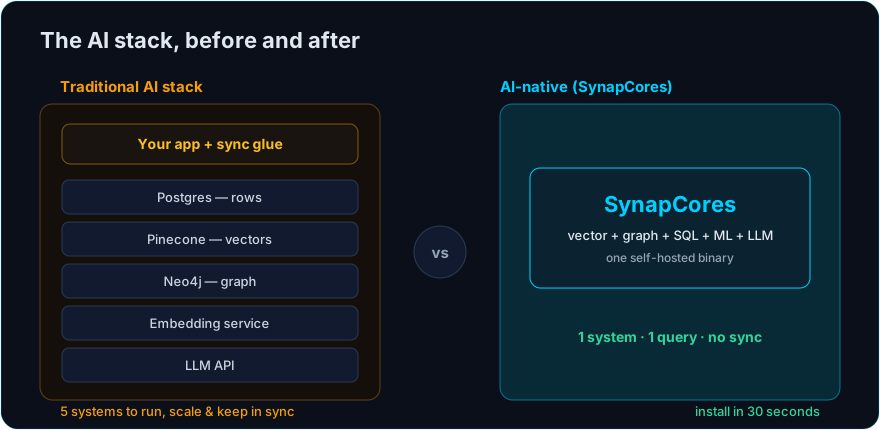
Traditional database platforms require extensive manual configuration. Database administrators spend countless hours tuning parameters and optimizing queries. Performance degradation often goes unnoticed until problems become critical.
AI-native database systems eliminate this manual burden through embedded intelligence. The platform monitors all operations continuously. It identifies potential issues before they impact performance. Automatic adjustments happen in milliseconds rather than hours or days.
| Capability | Traditional Database | AI-Native Database |
|---|---|---|
| Query Optimization | Manual query tuning required | Automatic query optimization in real-time |
| Index Management | DBA creates and maintains indexes | Autonomous index creation and removal |
| Resource Allocation | Static configuration parameters | Dynamic resource adjustment based on workloads |
| Performance Monitoring | Reactive problem detection | Predictive issue identification and prevention |
| Scaling Operations | Manual capacity planning | Automatic scale-up and scale-down |
Integration of Vector Search Capabilities
Modern AI-native database platforms include native vector search functionality. This capability supports semantic search operations essential for AI applications. Unstructured data becomes searchable through vector embeddings.
Vector search enables retrieval-augmented generation workflows. Applications can find semantically similar content rather than relying on exact keyword matches. This transforms how systems handle unstructured data like documents, images, and audio files.
The integration happens at the architecture level rather than as an add-on. Vector indexes coexist with traditional database indexes. Hybrid queries combine structured data filters with vector similarity search. This unified approach simplifies development and improves performance.
Scalability Architecture in AI-Native Database Platforms (Enterprise / roadmap)
Scalability represents one of the most critical capabilities in modern data systems. An AI-native database must handle growing workloads without performance degradation. The architecture must support both vertical and horizontal scaling strategies seamlessly.
Distributed Processing and Data Sharding
Modern platforms distribute data across multiple nodes automatically. The system determines optimal shard keys without requiring manual configuration. Data placement algorithms balance load across the entire cluster continuously.
Each node operates independently while maintaining global consistency. Transactions span multiple shards when necessary. The coordination happens transparently to applications. This distribution model supports massive scale while maintaining ACID transactions.
Elastic Resource Management
Resource allocation adapts to changing workload demands automatically. The platform monitors CPU usage, memory consumption, and storage patterns continuously. Scaling decisions happen based on predictive models rather than reactive thresholds.
- Automatic compute resource adjustment during peak periods
- Intelligent memory allocation based on query patterns
- Storage expansion without service interruption
- Network bandwidth optimization for distributed operations
- Cost optimization through efficient resource utilization
Horizontal Scaling
The platform adds more nodes to the cluster automatically when workloads increase. Each new node assumes a portion of the total load. Distribution happens without manual intervention or service disruption. Applications continue operating normally during scaling events.
Vertical Scaling
Individual nodes receive additional resources when needed. Memory capacity increases automatically. CPU cores expand to handle complex processing. Storage tiers adjust based on data access patterns. The system chooses the most cost-effective scaling approach.
Hybrid Scaling Model
The most advanced systems combine both scaling approaches intelligently. Machine learning algorithms determine the optimal strategy for specific workloads. Some operations benefit from more nodes while others need more powerful individual systems. The platform makes these decisions automatically.
Multi-Region Deployment Capabilities
Global applications require data presence across multiple geographic regions. An AI-native database supports multi-region deployment with intelligent replication. Data copies exist near users for low-latency access.
The platform manages consistency across regions automatically. Conflict resolution happens through configurable policies. Applications choose between strong consistency and eventual consistency based on specific requirements. The system maintains data integrity regardless of deployment topology.
Ready to put it to work?
Download the free Community Edition and run the unified engine — vector, graph, SQL, and AutoML in one binary — on your own machine in about 30 seconds. (Autonomous scaling is an Enterprise / roadmap capability.)
Download Free → See the live demos →
Built-In Performance Optimization and Autonomous Tuning (Enterprise / roadmap)
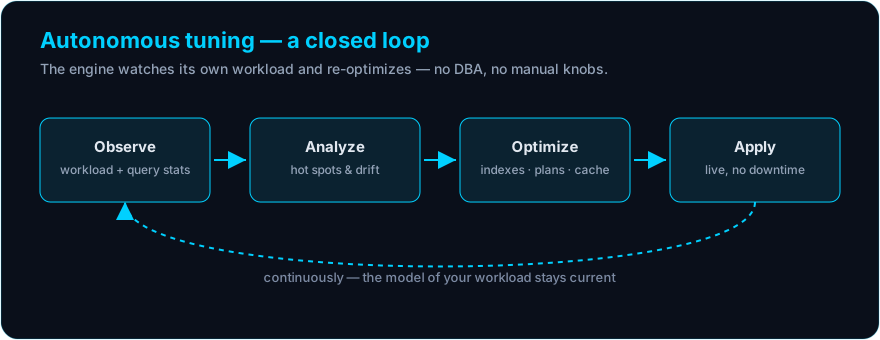
Performance optimization traditionally required deep expertise and constant attention. Database administrators monitored metrics manually. They adjusted configuration parameters through trial and error. This reactive approach often missed optimization opportunities.
Autonomous tuning eliminates this manual process entirely. The AI-native database monitors every aspect of system performance continuously. Machine learning models identify optimization opportunities in real-time. Adjustments happen automatically without human intervention.
Intelligent Query Processing
Query optimization represents one of the most impactful areas for performance improvement. The autonomous tuning engine analyzes every query that enters the system. It learns from execution patterns and builds predictive models.
The optimization process happens in multiple stages. First, the system predicts query execution time based on historical patterns. Then it generates multiple potential execution plans. Machine learning algorithms evaluate each plan and select the optimal approach. Finally, the engine monitors actual execution and adjusts future predictions.
Query Plan Evolution
Execution plans improve over time through continuous learning. The system tracks which plans perform best for specific query patterns. New data distribution patterns trigger automatic plan regeneration. This evolution happens without developer involvement.
Adaptive Index Management
Index creation and maintenance traditionally required careful planning. Administrators analyzed query patterns manually. They created indexes based on assumptions about future workloads. Wrong decisions led to wasted storage and degraded write performance.
Autonomous tuning transforms index management into a continuous optimization process. The system monitors query performance and identifies opportunities for new indexes. It creates indexes automatically when benefits outweigh costs. Unused indexes are removed to preserve write performance and storage.
- Automatic index creation for frequently filtered columns
- Removal of redundant or unused indexes
- Partial index generation for specific query patterns
- Covering index creation to eliminate table lookups
- Index type selection based on data characteristics
- Continuous index usage monitoring and optimization
Memory and Cache Optimization
Memory management affects every database operation. Cache hit rates determine query response times. Buffer pool configuration impacts concurrent transaction performance. Traditional systems required manual tuning of dozens of parameters.
The autonomous tuning engine manages memory allocation dynamically. It predicts which data will be accessed soon based on usage patterns. Hot data stays in memory while cold data moves to slower storage tiers. This optimization happens continuously as workloads change.
Cache warming occurs automatically before anticipated load increases. The system preloads frequently accessed data into memory. Query response times remain consistent even during traffic spikes. Applications benefit from predictable performance without manual cache management.
Storage-Level Performance Enhancements
Storage optimization extends beyond simple data placement. The AI-native database selects compression algorithms intelligently. Different data types benefit from different compression strategies. The system analyzes data characteristics and chooses optimal approaches automatically.
| Optimization Type | Traditional Approach | Autonomous Approach | Performance Impact |
|---|---|---|---|
| Query Planning | Static cost-based optimizer | ML-driven adaptive planning | 40-60% faster complex queries |
| Index Selection | Manual DBA analysis | Automatic creation and removal | 70-80% reduction in slow queries |
| Memory Allocation | Fixed configuration parameters | Dynamic workload-based adjustment | 30-50% better cache hit rates |
| Storage Layout | One-time design decisions | Continuous reorganization | 25-35% improved I/O efficiency |
| Compression Strategy | Global compression setting | Per-block algorithm selection | 50-70% better compression ratios |
Predictive Performance Management
The most advanced capability of autonomous tuning is predictive optimization. The system doesn't just react to current conditions. It anticipates future performance issues before they occur.
Machine learning models analyze historical performance data continuously. They identify patterns that precede performance degradation. When these patterns emerge, the system takes preventive action automatically. Problems are solved before users experience any impact.
This predictive capability extends to capacity planning. The platform forecasts resource requirements weeks or months in advance. It recommends scaling actions before capacity constraints emerge. Organizations avoid both over-provisioning waste and performance crises.
Vector Search and Semantic Capabilities Within Database Systems
Traditional database queries rely on exact matches and structured filters. This approach works well for structured data but fails with unstructured content. Modern applications need to search images, documents, audio files, and other complex data types.
Vector search transforms how databases handle unstructured data. Content is converted into mathematical representations called embeddings. These vectors capture semantic meaning rather than just keywords. Similar items cluster together in vector space regardless of exact word matches.
Native Vector Search Integration
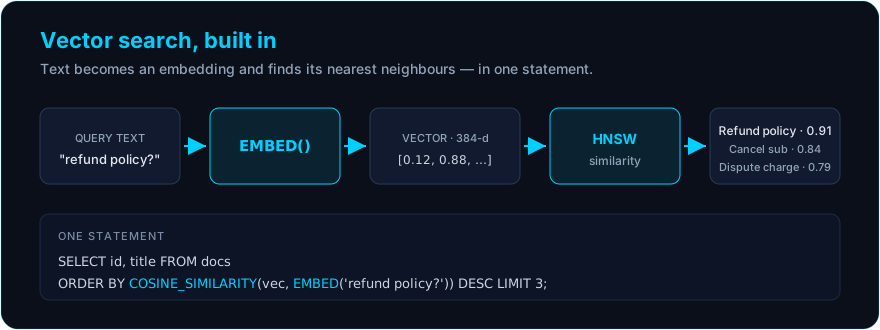
The integration of vector search directly within database architecture provides significant advantages. Applications no longer need separate vector databases. Data remains in one platform with unified security and governance. Hybrid queries combine traditional filters with semantic search seamlessly.
The AI-native database stores vector embeddings alongside structured data efficiently. Specialized indexes enable fast similarity search across millions or billions of vectors. Query processing combines vector similarity calculations with traditional database operations in a single execution plan.
Text Embeddings
Documents, articles, and text content convert to dense vector representations. Semantic search finds conceptually similar content even with different wording. This capability powers advanced search features and content recommendations.
Image Embeddings
Visual content becomes searchable through vector representations. Similar images cluster together based on visual features. Applications can find products by image or detect duplicate content automatically.
Multi-Modal Embeddings
Advanced models create unified vector spaces across multiple data types. Text searches can return relevant images. Image queries can find related documents. This cross-modal search capability enables innovative applications.
Retrieval-Augmented Generation Support
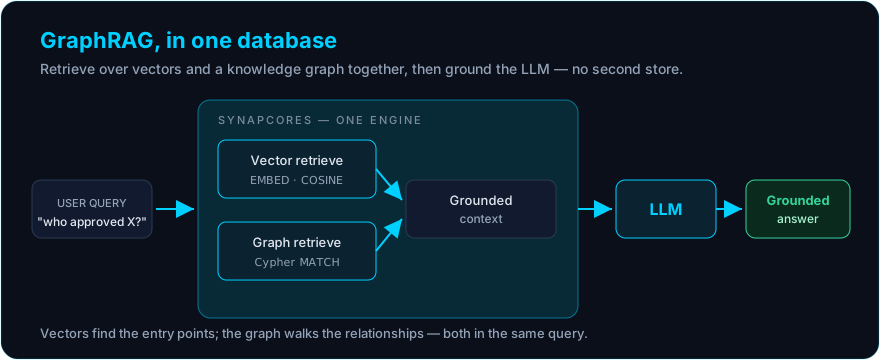
Retrieval-augmented generation represents one of the most important AI application patterns. Large language models generate responses by first retrieving relevant context from a knowledge base. The AI-native database serves as this knowledge repository.
The workflow begins when a user submits a query. The system converts the query into a vector embedding. Vector search retrieves the most relevant documents from the database. These documents provide context to the language model for response generation. The entire process happens in milliseconds.
This architecture keeps AI applications grounded in factual data. Models don't hallucinate information because they reference actual documents. Organizations maintain control over the knowledge base. Updates to the database immediately affect AI responses without model retraining.
Hybrid Search Architectures
The most powerful search implementations combine multiple approaches. Keyword filters narrow results to relevant categories. Vector similarity finds semantically related content. Traditional database predicates filter by metadata. All these operations happen in a single query.
Consider an e-commerce product search. A user describes desired features in natural language. The system combines vector search for semantic matching with filters for price range, availability, and ratings. Traditional database capabilities handle the filters while vector search processes the semantic description.
- Unified query language for hybrid search operations
- Combined indexes supporting both structured and vector search
- Score fusion algorithms merging different ranking signals
- Query optimization across all search types
- Consistent transaction semantics for all data types
- Integrated security model covering structured and unstructured data
Advanced Vector Search Capabilities
Beyond basic similarity search, AI-native database platforms offer sophisticated vector operations. Filtered vector search applies predicates before similarity calculations. This dramatically improves performance by reducing the search space. Multi-vector queries find items similar to multiple reference vectors simultaneously.
The platform supports various distance metrics for different use cases. Cosine similarity works well for text embeddings. Euclidean distance suits certain image applications. The system selects appropriate metrics automatically based on embedding models used.
Practical Use Cases and Real-World Applications
AI-native database technology delivers value across numerous industries and application types. Organizations implement these systems to solve specific business challenges. The following examples demonstrate practical applications in production environments.
Financial Services and Fraud Detection
Financial institutions process millions of transactions daily. Each transaction requires real-time fraud analysis. Traditional systems struggle with the scale and speed required for effective fraud detection.
AI-native database platforms enable real-time fraud detection at scale. Vector search identifies transactions similar to known fraud patterns. Machine learning models score risk continuously. The database processes transaction data and fraud detection within milliseconds. Autonomous tuning ensures consistent performance during peak transaction periods.
The platform handles both structured transaction data and unstructured data like customer communications. Vector embeddings enable semantic analysis of support tickets and emails. This comprehensive approach catches sophisticated fraud schemes that traditional rule-based systems miss.
E-Commerce Personalization and Recommendations
Online retailers need personalized product recommendations for millions of customers. Each customer has unique preferences and browsing history. The recommendation engine must operate in real-time as users browse.
Vector search within database systems powers these recommendation engines efficiently. Product catalog items exist as vector embeddings based on descriptions, images, and customer behavior. When a user views a product, the system finds similar items instantly through vector similarity search.
Product Discovery
Customers find products through natural language descriptions. Vector search understands intent rather than requiring exact keyword matches. This improves conversion rates significantly.
- Visual product search using image uploads
- Natural language product queries
- Cross-category recommendations based on style
- Seasonal trend-based suggestions
Inventory Optimization
The database tracks real-time inventory across warehouses. Autonomous tuning optimizes queries as product catalogs grow. Predictive models forecast demand based on historical patterns.
- Real-time stock level tracking
- Automated reorder point calculation
- Demand forecasting integration
- Supply chain optimization queries
Customer Analytics
Behavioral data analysis happens in real-time. The platform processes clickstream data, purchases, and customer interactions continuously. Segmentation models update automatically.
- Real-time customer segmentation
- Lifetime value prediction models
- Churn probability scoring
- Personalization rule generation
Dynamic Pricing
Pricing strategies adjust based on market conditions and inventory levels. The AI-native database processes competitive data and demand signals. Price optimization happens automatically.
- Competitive price monitoring
- Demand-based price adjustment
- Margin optimization algorithms
- A/B testing price strategies
Healthcare and Medical Research
Healthcare organizations manage diverse data types including patient records, medical imaging, and research data. Finding similar patient cases assists diagnosis. Research requires semantic search across medical literature.
Vector search enables semantic analysis of medical records and research papers. Doctors find similar patient cases based on symptoms and test results. Researchers discover relevant studies through natural language queries. The database maintains strict security and compliance requirements automatically.
Content Platforms and Media Applications
Streaming services and content platforms need intelligent recommendation systems. Users expect personalized content suggestions. The platform must process viewing history, preferences, and content metadata in real-time.
The AI-native database stores content metadata and user behavioral data together. Vector embeddings represent movies, shows, music, and articles. Recommendation queries combine collaborative filtering with semantic search. The autonomous tuning system ensures recommendations remain fast as catalogs grow.
Internet of Things and Sensor Data
IoT deployments generate massive time-series data from thousands of sensors. Processing this data requires specialized capabilities. Anomaly detection must happen in real-time to prevent equipment failures.
The platform ingests sensor data at high rates while maintaining query performance. Time-series optimizations handle sequential data efficiently. Machine learning models detect anomalies by comparing current readings to historical patterns. Autonomous tuning adjusts storage strategies as data accumulates.
See AI-Native Databases in Action
Explore detailed case studies and technical implementation guides. Download our industry-specific application blueprints to understand how organizations deploy AI-native database technology for their unique requirements.
Explore SynapCores use cases →
Deployment Models and Architecture Considerations
Organizations choose deployment strategies based on specific requirements. Each model offers different trade-offs regarding control, complexity, and operational overhead. The AI-native database supports multiple deployment architectures to accommodate diverse needs.
Cloud-Native Managed Services
Fully managed cloud services eliminate infrastructure management entirely. The provider handles deployment, scaling, backups, and security updates. Organizations focus on application development rather than database operations.
This deployment model provides the fastest time to value. Developers can provision database instances in minutes. Automatic scaling handles load variations without manual intervention. Built-in disaster recovery and backup systems protect data automatically.
Major cloud platforms like AWS, Azure, and Google Cloud offer native AI-native database services. These integrate with other cloud services seamlessly. Security features leverage cloud-native identity and access management. Cost optimization happens automatically through intelligent resource allocation.
Self-Managed Deployment Options
Some organizations require complete control over their database infrastructure. Regulatory requirements may mandate specific deployment locations. Self-managed deployments provide maximum flexibility while leveraging AI-native capabilities.
Cloud Managed Advantages
- Zero infrastructure management overhead
- Automatic scaling and performance optimization
- Built-in high availability and disaster recovery
- Consumption-based pricing models
- Rapid deployment and provisioning
- Integrated monitoring and alerting
Self-Managed Advantages
- Complete infrastructure control
- Custom security configurations
- Specific hardware optimization
- Regulatory compliance flexibility
- Cost predictability for stable workloads
- Integration with existing systems
Hybrid Model Advantages
- Data residency compliance
- Burst capacity to cloud
- Gradual cloud migration path
- Disaster recovery flexibility
- Workload-specific deployment
- Cost optimization strategies
Hybrid and Multi-Cloud Architectures
Modern enterprises often adopt hybrid strategies combining on-premises and cloud deployments. Data sovereignty requirements may mandate local data storage. Performance considerations might require edge deployments near users.
The AI-native database supports consistent operations across deployment environments. A single control plane manages databases regardless of location. Replication synchronizes data between environments automatically. Applications access data through unified APIs without environment-specific code.
Security and Compliance Considerations
Security features are embedded throughout the AI-native database architecture. Encryption protects data at rest and in transit automatically. Access controls leverage role-based permissions and attribute-based policies. Audit logging tracks all data access for compliance purposes.
- Automatic encryption for all data and backups
- Fine-grained access control at row and column levels
- Comprehensive audit logging for compliance
- Data masking and anonymization capabilities
- Network isolation and private connectivity options
- Compliance certifications for major regulatory frameworks
The autonomous tuning system optimizes security operations alongside performance. Security scans happen continuously without impacting workloads. Threat detection models identify suspicious access patterns automatically. The platform maintains security best practices without requiring specialized expertise.
Integration with Existing Technology Stacks
Organizations have existing applications and data infrastructure. The AI-native database must integrate smoothly without requiring complete application rewrites. Multiple connection protocols support legacy systems alongside modern architectures.
Standard database protocols enable drop-in replacement for existing systems. Applications use familiar SQL interfaces or NoSQL APIs. Migration tools simplify moving data from legacy platforms like traditional relational databases or earlier NoSQL systems.
The platform connects to analytics tools, business intelligence platforms like Tableau and Power BI, and machine learning frameworks. APIs support application development in all major programming languages. Connectors enable data pipelines for ETL workflows and real-time streaming.
Key Evaluation Criteria for AI-Native Database Selection
Choosing the right AI-native database requires careful evaluation of technical capabilities and business requirements. Organizations should assess multiple factors beyond basic feature checklists. The following criteria help guide selection decisions.
Performance and Scalability Requirements
Understanding workload characteristics is essential before selecting a platform. Different applications have varying performance profiles. Transactional workloads prioritize consistency and write performance. Analytical workloads need scan efficiency and query parallelization.
4.6
Overall Performance Rating
Query Performance
4.6
Write Throughput
4.4
Horizontal Scalability
4.7
Vector Search Speed
4.5
Consistency Guarantees
4.3
Autonomous Optimization
4.8
Autonomous Capabilities Assessment
Not all platforms provide the same level of autonomous operations. Some systems require more manual tuning than others. Evaluating the depth of autonomous capabilities is critical.
Test platforms under realistic workloads to assess automatic optimization. Monitor how quickly systems adapt to changing query patterns. Measure the reduction in administrative overhead compared to traditional databases. Consider the learning period required before autonomous features deliver value.
Data Model Flexibility
Modern applications often need multiple data models within a single system. Document storage suits some use cases. Graph relationships benefit other workflows. Time-series data requires specialized handling. The ideal platform supports diverse data types natively.
Document Store Capabilities
Flexible schema design for evolving application requirements. Native JSON support with efficient indexing. Dynamic schema changes without downtime.
Relational Transactions
ACID transactions for critical business operations. Strong consistency guarantees. SQL compatibility for existing applications.
Graph Processing
Native graph storage and traversal. Relationship queries without joins. Social network and recommendation support.
Cost Structure and Total Cost of Ownership
Pricing models vary significantly across AI-native database platforms. Some charge based on storage consumption. Others price by compute resources. Understanding total cost of ownership requires analysis beyond list prices.
Consider operational costs including administrative overhead. Factor in costs for training teams on new technology. Evaluate costs for migration from existing systems. Calculate savings from reduced manual tuning and improved performance. The lowest sticker price rarely represents the most cost-effective solution.
Vendor Ecosystem and Community Support
Strong vendor ecosystems provide valuable resources for implementation and troubleshooting. Active communities offer knowledge sharing and best practices. Available tools and integrations accelerate development.
- Documentation quality and completeness
- Community size and activity levels
- Third-party tool integrations
- Professional services availability
- Training and certification programs
- Frequency of platform updates and improvements
Evaluation Tip: Create a proof-of-concept using your actual data and query patterns. Benchmark performance against your specific requirements rather than relying on vendor-provided benchmarks. This testing reveals real-world suitability more accurately than theoretical comparisons.
Migration Strategies and Best Practices
Moving from traditional database systems to AI-native platforms requires careful planning. A structured migration approach minimizes risks and ensures successful outcomes. Organizations should follow proven methodologies rather than attempting big-bang migrations.
Assessment and Planning Phase
Begin by thoroughly analyzing existing database workloads. Identify which applications will migrate first. Prioritize based on potential benefits and migration complexity. High-traffic applications with performance issues make ideal initial candidates.
Document data models, query patterns, and performance requirements. Understand dependencies between applications and data. Identify custom extensions or stored procedures that need adaptation. Create a detailed migration roadmap with realistic timelines.
Gradual Migration Approach
Incremental migration reduces risk compared to complete cutover. Start with non-critical workloads to gain experience. Migrate read replicas first while maintaining write operations on legacy systems. This approach allows learning and adjustment without impacting production.
- Establish dual-write pattern: Applications write to both old and new database systems simultaneously. This maintains data synchronization during transition periods.
- Migrate read traffic gradually: Route increasing percentages of read queries to the AI-native database. Monitor performance and rollback if issues emerge.
- Validate data consistency: Continuously compare data between systems. Automated validation tools catch discrepancies before they cause problems.
- Switch write traffic: After successful read migration, move write operations to the new platform. Maintain the legacy system as a fallback temporarily.
- Decommission legacy systems: Only remove old infrastructure after complete stability and confidence in the new platform.
Application Adaptation Requirements
Most applications require some modification during migration. Query syntax may differ slightly between platforms. Applications should adopt new capabilities like vector search. Code changes might optimize for autonomous tuning features.
Modernize data access patterns during migration. Replace inefficient queries with better approaches. Implement connection pooling if not already present. Adopt asynchronous processing where appropriate. These improvements maximize benefits from the new platform.
Testing and Validation Processes
Comprehensive testing prevents surprises during production migration. Load testing verifies performance under realistic conditions. Failover testing ensures high availability mechanisms work correctly. Security testing validates access controls and encryption.
Migration Success Factors
- Executive sponsorship and adequate budget
- Dedicated migration team with clear ownership
- Thorough testing before production cutover
- Gradual rollout with rollback capability
- Comprehensive monitoring during transition
- Training for development and operations teams
Common Migration Pitfalls
- Insufficient planning and timeline pressure
- Attempting big-bang migrations
- Inadequate testing with realistic workloads
- Ignoring application code optimization
- Underestimating training requirements
- Lack of rollback planning
Performance Optimization Post-Migration
The migration completes when applications run on the AI-native database. However, optimization continues afterward. The autonomous tuning system needs time to learn workload patterns. Initial performance may not reflect long-term capabilities.
Monitor system behavior during the learning period. The platform collects statistics and builds optimization models. Performance improves continuously as the system gains experience. After several weeks, autonomous tuning delivers full benefits.
Work with the platform to optimize schema design for AI-native capabilities. Restructure data to leverage vector search features. Implement caching strategies that complement autonomous optimization. These refinements maximize value from the migration investment.
Future Evolution of AI-Native Database Technology
The AI-native database category continues evolving rapidly. New capabilities emerge as artificial intelligence advances. Understanding upcoming trends helps organizations plan for future requirements.
Enhanced Autonomous Capabilities
Current autonomous features will become more sophisticated. Future systems will predict workload changes days or weeks in advance. Automatic schema evolution will adapt data models based on application usage patterns. Self-healing capabilities will prevent failures before they occur.
Machine learning models will become more specialized. Different models will optimize specific workload types. The platform will automatically select and apply appropriate models. This specialization will deliver better performance across diverse use cases.
Deeper AI Model Integration
Database systems will host AI model inference directly. Applications will execute machine learning predictions within database queries. This integration eliminates data movement between systems. Response times improve dramatically when models run where data resides.
Training workflows will leverage database capabilities more extensively. Feature engineering will happen within database operations. Model training will access data without extraction to separate platforms like dedicated training systems. This tight integration accelerates the entire machine learning lifecycle.
Advanced Vector Search Capabilities
Vector search functionality will expand beyond current implementations. Multi-vector queries will become more sophisticated. Contextual embeddings will enable even more precise semantic search. Cross-modal search will improve dramatically as embedding models advance.
The platform will support larger vector dimensions as models grow. Approximate nearest neighbor algorithms will become more accurate and faster. Filtering capabilities will integrate more deeply with vector operations. These improvements will enable new application types.
Quantum Computing Readiness
As quantum computing matures, database architectures will adapt. Quantum-resistant encryption will protect data from future threats. Some database operations may leverage quantum acceleration. Organizations should consider long-term quantum readiness when selecting platforms.
Edge Computing Integration
Distributed edge deployments will become more prevalent. AI-native databases will operate efficiently on edge devices. Synchronization between edge and central systems will improve. Autonomous tuning will optimize for constrained edge environments.
This evolution supports Internet of Things applications and mobile edge computing. Data processing happens closer to sources. Latency decreases while bandwidth consumption drops. The database architecture adapts automatically to edge constraints.
Making the Right AI-Native Database Choice
AI-native database technology represents a significant advancement in data management. These platforms solve real problems that organizations face with traditional systems. Autonomous tuning reduces operational overhead dramatically. Built-in performance optimization maintains consistent response times. Native vector search capabilities enable modern AI applications.
The decision to adopt an AI-native database should align with business objectives. Organizations experiencing scalability challenges benefit immediately. Teams spending excessive time on database tuning reclaim valuable engineering resources. Applications requiring semantic search capabilities gain new functionality.
Success requires proper planning and realistic expectations. The technology is mature but still evolving. Early adopters gain competitive advantages through improved application performance. They reduce infrastructure costs through efficient resource utilization. Development teams build features faster without database constraints.
Start with clear requirements and thorough evaluation. Test platforms with realistic workloads before committing. Plan migration carefully with gradual rollout strategies. Invest in team training to maximize platform capabilities. The effort invested in proper adoption pays dividends through improved application performance and reduced operational costs.
Recipes to start from
The concepts in this guide, as runnable recipes on the free Community Edition:
- Semantic document search — vector search in SQL
- GraphRAG multi-hop Q&A — vector + graph together
- Credit-card fraud detection with AutoML — in-database ML
- Agentic sales account research — durable agent memory
- Audio transcription & analysis — multimodal in one pipeline
Try SynapCores today
Get the unified AI-native engine — vector, graph, SQL, and in-database AutoML — as a free, single-binary Community Edition. Native MCP, an OpenClaw memory plugin, and the live demos are all one command away.
Download Free → Explore the features → See the live demos →
Get AI Database Updates
Subscribe to receive technical insights and platform updates
Subscribe Now